
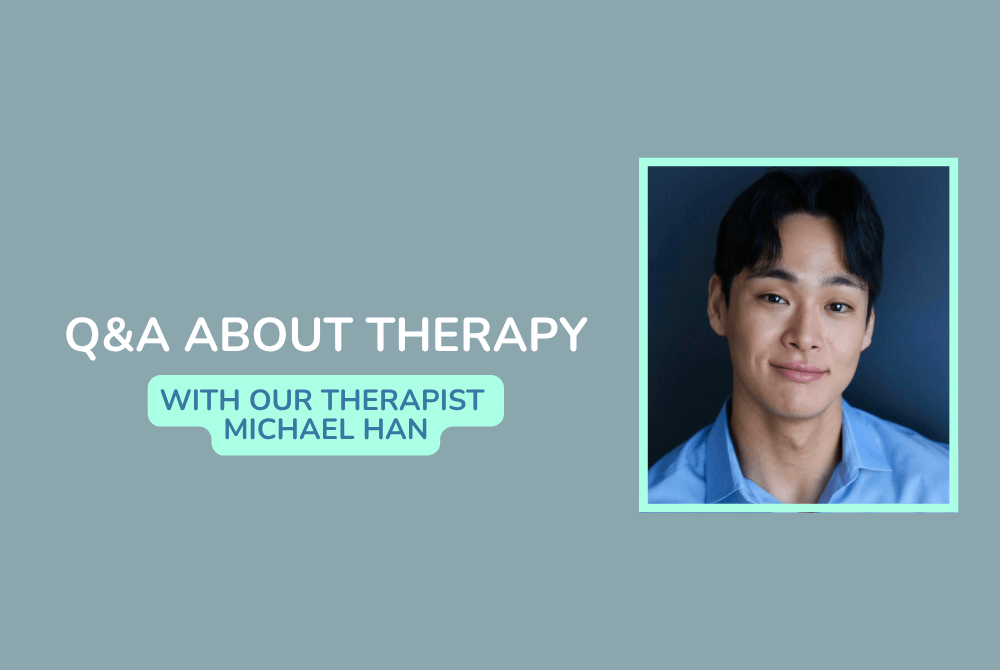
Q&A About Therapy with Michael Han
Therapy isn’t just about getting through difficult moments, it’s about understanding yourself more deeply, building healthier patterns, and creating meaningful change that lasts. In this Q&A, Empowered Therapy therapist Michael Han shares how he helps clients navigate anxiety, relationship challenges, and life transitions with greater clarity and confidence. He discusses the importance of emotional awareness, practical coping strategies, and learning how to break free from patterns that no longer serve you so you can move forward with more intention and resilience.
How do you help clients feel safe when beginning to process trauma?
Answer: When helping clients begin to process trauma, my primary focus is on establishing a strong sense of safety and trust. I take a client-centered approach, allowing them to set the pace and take the lead in what they feel ready to share. I’m mindful not to rush or pressure clients into discussing difficult experiences before they feel prepared, as a sense of control is essential in trauma work.
I strive to be consistently validating, warm, and patient, creating an environment where clients feel heard and supported. I also recognize the complexity and nuance of trauma, so I approach each client’s experience with genuine compassion and without judgment.
By affirming their emotions and normalizing their responses, I help clients feel less alone in their experiences, fostering a space where clients feel safe enough to gradually explore their trauma in a way that is empowering, respectful, and aligned with their readiness.
How do you create a space where clients feel seen and affirmed in their identity?
Answer: I strive to create a space where clients feel seen and affirmed by approaching each person holistically and intentionally recognizing their inherent strengths. I work to help clients identify and value their worth, ensuring that perceived flaws or challenges do not define how they see themselves.
I’m also mindful of my own positionality as a gay Korean American cisgendered male, and how it shapes my perspective in the therapeutic relationship. By acknowledging this, I can more authentically connect with clients—highlighting shared human experiences while also honoring the unique nuances of each individual’s identity. This balance allows clients to feel both understood and respected in their distinct lived experiences.
What unique challenges do you often see for LGBTQ+ and/or Asian American clients, and how do you address them?
Answer: While I’m careful not to generalize across all experiences, I often see Asian American clients navigating tension between collectivist cultural values at home and the more individualistic norms emphasized in academic and professional spaces. This can be particularly challenging during key developmental periods, such as adolescence and early adulthood, when individuals are forming their sense of identity. At times, this tension can lead to a fragmented or polarized sense of self, where clients may feel pressure to distance themselves from their cultural roots in order to find belonging in predominantly Western or white spaces.
For LGBTQ+ clients, a common challenge I encounter is navigating internalized stigma, often shaped by societal expectations, fear of rejection, and the process of self-acceptance. These experiences can complicate identity development and contribute to feelings of shame or isolation.
In addressing these challenges, I focus on helping clients put language to their experiences and normalizing the complexity of what they’re feeling. I work collaboratively to identify and process sources of shame, while fostering self-compassion and understanding. I also emphasize that many of the strategies clients developed—such as repressing needs, minimizing the self, masking, or code-switching—were often necessary coping mechanisms to navigate their environments. By honoring these experiences with empathy and without judgment, I aim to support clients in integrating their identities in a way that feels authentic, empowering, and sustainable.
How do you help clients process grief that others may not fully understand or acknowledge?
Answer: I approach grief as a non-linear, individualized process rather than something clients are expected to “get over.” I often provide psychoeducation to normalize that grief is both an emotional and neurological experience, as the mind and body adapt to a significant loss.
In my work, I draw from person-centered therapy to create a compassionate, validating space, while incorporating elements of CBT to address unhelpful beliefs about how grief “should” look. I also integrate ACT by helping clients make space for their pain while continuing to engage in meaningful aspects of life.
I emphasize meaning-making, supporting clients in understanding grief as an extension of love and connection. This perspective can help them hold both the pain of loss and the significance of the relationship, assisting clients in developing a more integrated relationship with their grief over time.
What’s your approach for clients who feel frustrated or ashamed about their ADHD symptoms?
Answer: When working with clients who feel frustrated or ashamed about their ADHD symptoms, I first focus on creating a nonjudgmental and validating space where those emotions can be expressed openly. Many clients have internalized negative messages about their difficulties, so I aim to normalize their experiences and help separate their sense of self from the challenges they’re facing.
I often incorporate psychoeducation to reframe ADHD as a neurodevelopmental difference rather than a personal failure. This can help reduce shame and build self-understanding. From there, I draw on approaches like CBT to identify and challenge unhelpful thought patterns, and self-compassion–focused work to help clients respond to themselves with more kindness and flexibility.
I also take a strengths-based perspective, helping clients recognize the ways ADHD traits can be adaptive in certain contexts. At the same time, we collaborate on practical strategies—such as building structure, external supports, and realistic routines—that align with how their brain works rather than expecting them to fit into rigid systems.
The goal is to help clients move from self-criticism toward self-understanding and empowerment, so they can navigate their challenges with greater confidence and agency.
How do you help clients balance their own needs with the needs of others?
Answer: I approach this by first helping clients build awareness around their own needs, values, and limits, as many individuals—especially those who are more relationally oriented—may not have had consistent opportunities to prioritize themselves. Using a person-centered and psychodynamic lens, I explore the underlying patterns that shape how they relate to others, including beliefs around responsibility, worth, and fear of conflict or rejection.
I often integrate a process oriented approach, utilizing CBT to identify and challenge unhelpful thought patterns, such as equating self-sacrifice with being “good” or fearing that setting boundaries will harm relationships. Alongside this, I incorporate elements of ACT to help clients clarify their values and make intentional choices that honor both their own well-being and their relationships.
Ultimately, my goal is to help clients move toward a more balanced and integrated way of relating—where they can care for others without losing sight of themselves, and where their relationships feel mutual, respectful, and aligned with their values.
How do you help clients balance their own needs with the needs of others?
Answer: I approach this by first helping clients build awareness around their own needs, values, and limits, as many individuals—especially those who are more relationally oriented—may not have had consistent opportunities to prioritize themselves. Using a person-centered and psychodynamic lens, I explore the underlying patterns that shape how they relate to others, including beliefs around responsibility, worth, and fear of conflict or rejection.
I often integrate a process oriented approach, utilizing CBT to identify and challenge unhelpful thought patterns, such as equating self-sacrifice with being “good” or fearing that setting boundaries will harm relationships. Alongside this, I incorporate elements of ACT to help clients clarify their values and make intentional choices that honor both their own well-being and their relationships.
Ultimately, my goal is to help clients move toward a more balanced and integrated way of relating—where they can care for others without losing sight of themselves, and where their relationships feel mutual, respectful, and aligned with their values.