
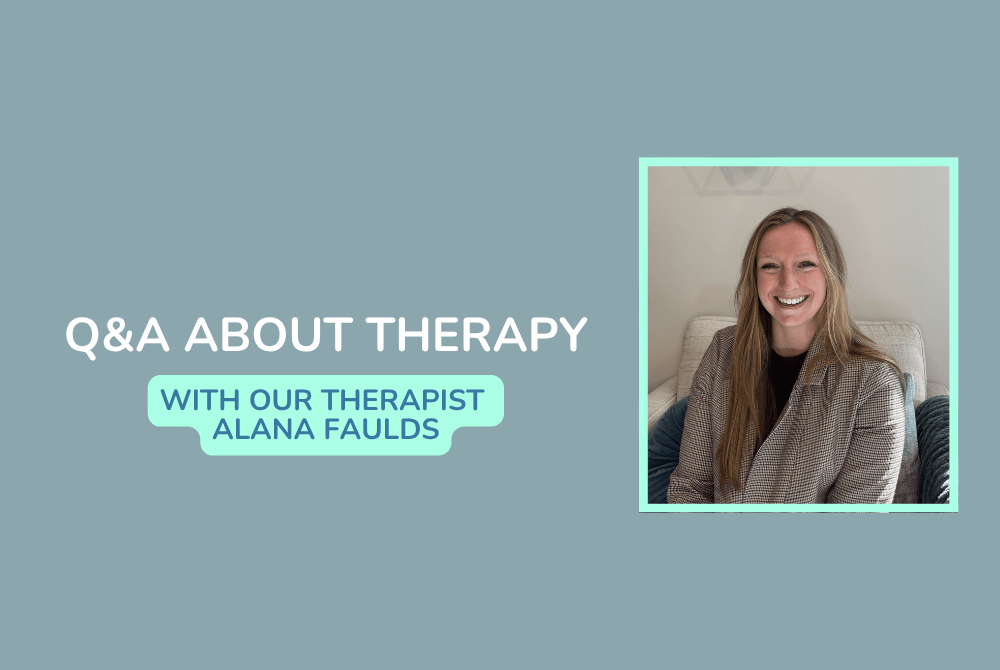
Q&A About Therapy with Alana Faulds
Therapy isn’t just about getting through life’s hardest moments, it’s about building the confidence, emotional awareness, and resilience to move through uncertainty with greater trust in yourself. In this Q&A, Empowered Therapy therapist Alana Faulds shares how she helps clients navigate performance anxiety, perfectionism, social anxiety, life transitions, and trauma with compassion and curiosity. She explores how understanding protective patterns, tolerating uncertainty, and reconnecting with your values can create space for growth, deeper connection, and lasting change.
How do you help clients manage performance anxiety in high-pressure environments?
Answer: I help clients navigate their performance anxiety in high-pressure environments by integrating multiple approaches, including Acceptance-Commitment Therapy, emotional exploration and regulation strategies, and cognitive reframing.
I work with clients to become curious about their fears by building a deeper awareness of how their mind and body responds to these environments. I view pressure as a construct that has been created by our past experiences and beliefs. When we build understanding and process our emotions, we can reshape our perspective to make these situations feel more manageable.
The goal is to help clients show up with greater confidence and control within themselves, even when their environments feel outside of their control.
What’s your approach to perfectionism and fear of failure?
Answer: My view of perfectionism comes from a protective lens that attempts to push individuals to reach their full potential, with the belief that this will fulfill their lives.
The fear of failure often fuels perfectionistic tendencies, leading to self-criticism, judgment and shame. I begin the approach with curiosity and gentleness, seeking the purpose of our beliefs and behaviors, with the goal of building understanding and peace to these parts of ourselves.
I like to bring realism into the therapy space, leaving room for logic and emotion to coincide, knowing there’s a time and place for both. When we learn to confront these fears, there is less tension and perceived pressure in our minds, clearing space to consider a new perspective and mentality.
Can you work with people outside of sports, like professionals, creatives, or students?
Answer: Yes! There are many overlaps in the way performance anxiety and pressure show up, and I’ve seen how effective mental performance strategies—often used with athletes—can be when applied to school, work, and other goal-oriented demands.
How do you help clients process grief that others may not fully understand or acknowledge?
Answer: I approach grief as a non-linear, individualized process rather than something clients are expected to “get over.” I often provide psychoeducation to normalize that grief is both an emotional and neurological experience, as the mind and body adapt to a significant loss.
In my work, I draw from person-centered therapy to create a compassionate, validating space, while incorporating elements of CBT to address unhelpful beliefs about how grief “should” look. I also integrate ACT by helping clients make space for their pain while continuing to engage in meaningful aspects of life.
I emphasize meaning-making, supporting clients in understanding grief as an extension of love and connection. This perspective can help them hold both the pain of loss and the significance of the relationship, assisting clients in developing a more integrated relationship with their grief over time.
How do you help someone stay motivated without burning out?
Answer: Motivation is correlated with values, energy and goals, and can be influenced by both internal and external factors. When I work with clients on motivation, we look beneath the surface at what’s really driving the push for success and name the barriers that tend to get in the way.
One common misconception about burnout is that it only comes from pushing too hard. More often, it shows up when we’re overworking while feeling disconnected from our values—when what we’re doing doesn’t fully align with what matters to us.
The goal is to help clients move from self-criticism toward self-understanding and empowerment, so they can navigate their challenges with greater confidence and agency.
How do you help clients who feel awkward or anxious in social situations?
Answer: I help clients change their relationship with anxiety rather than trying to eliminate it. That can look like making space for the discomfort while still moving toward connection in ways that feel meaningful to them.
We also explore the stories they hold about themselves in social situations—like “I’m awkward” or “I don’t belong”—and gently challenge and reframe those beliefs. In order to understand what’s underneath the anxiety, such as fear of judgment or a deep desire for connection, we spend time sitting with these emotions.
Can therapy help me build confidence in making or maintaining friendships?
Answer: Yes, it can! A sense of belonging plays an important role in both confidence and friendships, and it often begins with understanding what matters most to you in connection. Through our therapeutic relationship, we can identify the qualities, beliefs, and priorities that feel most meaningful in your relationships.
As you build a clearer sense of your needs and preferences, it becomes easier to recognize what you’re looking for in others and to engage in spaces that foster more natural, authentic connection.
What if I tend to avoid social situations altogether?
Answer: Avoidance is a coping strategy that can feel helpful in the moment, as it reduces exposure to anxiety, fear, and uncertainty. While it can be effective short term, it often limits opportunities for growth, healing, and deeper self-understanding.
I view avoidance as a form of protection—something that develops to keep us safe—but it can also distance us from the connection and meaning found in social spaces and community. When we face and understand avoidance, it often becomes less of a barrier, making other challenges feel more approachable.
How do you approach social anxiety versus general anxiety?
Answer: An approach to managing social anxiety versus general anxiety may begin with highlighting a client’s existing strengths and their ability to manage areas of life where anxiety is less present.
From this strengths-based foundation, I explore the physiological and emotional responses tied to social situations, building insight into the underlying “why” and identifying patterns that trigger these reactions.
Once we find inherent strength and deeper recognition of their capabilities, we can work toward building skills to navigate these situations with more confidence and self-assurance.
How do you help clients navigate big changes or uncertainty in life?
Answer: I encourage clients to sit in the gray areas of life and build tolerance for uncertainty, recognizing that so much of life exists there.
The unknown can bring up discomfort, anxiety, and fear, and I support clients in learning how to move through those feelings rather than avoid them.
I believe clients already hold the internal resources needed to face these challenges, and can benefit from guidance, space for processing, and steady support as they work toward greater clarity and confidence.
Can you support transitions that feel “positive” but still overwhelming?
Answer: Yes! Positive change can still feel overwhelming because new things come with unknowns and uncertainties. It can be helpful to identify how this transition aligns with one’s values and goals, reinforcing the desire while validating the emotional experience.
Through skills and processing, positive transitions can feel more manageable and hold the innate joy or excitement they produce.
What if I feel lost or unsure of my direction?
Answer: I offer empathy, reassurance, and steady support for clients navigating feelings of uncertainty or being lost. I enjoy exploring identity with clients—helping them uncover their interests and strengths, recognize their choices, and normalize both discovery and moments of feeling stuck.
I view uncertainty as a natural part of the human experience and create space to process the emotions that come with it, while gently supporting clients in exploring what feels most aligned with their goals and values.
How do you help someone adjust to a new identity or phase of life?
Answer: Adjusting to a new identity or phase of life can feel overwhelming, intimidating and full of uncertainty. I like to help clients break down these emotions to build greater understanding of their needs and desires in this new phase. I guide them through their transition with tools to build confidence, process their emotions, create tangible goals, and provide perspective that may be hard to achieve on their own
How do you create a sense of safety when working through deep or long-term trauma?
Answer: A central part of trauma work is supporting a client’s sense of autonomy and control in the therapy space. Exploring trauma can be incredibly important for building awareness, understanding, and validation, but I like to approach this at a pace that feels right for each client, each session.
Because trauma work can be painful and challenging, we focus on creating a sense of safety using coping strategies, a strong therapeutic relationship, and supporting clients in advocating for their needs as they engage with their emotions.
Identifying emotions provides insight into what they need and then we can address that need in the moment.
What approach do you take if someone feels “stuck” in patterns from their past?
Answer: When someone feels stuck in patterns, it’s important to build awareness and compassion for the parts of them that feel safe in what’s familiar.
I approach “stuckness” with curiosity and care, creating space for emotional exploration and a deeper understanding of the pattern’s function and purpose. From there, we can begin to relate to it differently.
Change and letting go of control can be uncomfortable, but it becomes more possible when approached with patience and gentleness.
How do you pace trauma work so it doesn’t feel too overwhelming?
Answer: I prioritize creating a space where clients feel a sense of autonomy and can communicate openly about what they need or want to discuss each session.
I check in regularly to get a feel for how things are landing mentally, emotionally, and physically, and I’m intentional about ending sessions in a grounded, regulated way so clients can leave feeling steady and supported.
I take a strengths-based approach that centers each person’s sense of worth, and I also bring in humor when it feels appropriate—because even when we’re working through heavier experiences, moments of levity can help make the process feel more manageable.
Can you help if I don’t fully understand or remember parts of my trauma?
Answer: Yes—this is a common experience. It’s normal to have gaps in memory, especially when it comes to trauma, and to feel unsure about parts of what happened.
While having details or a clear understanding can be helpful or feel reassuring, it’s not required for processing trauma.
What I focus on most with clients is providing space to share their feelings, perspective, and the impact the experience has had on them—so they can feel heard, validated, and begin moving toward healing.