
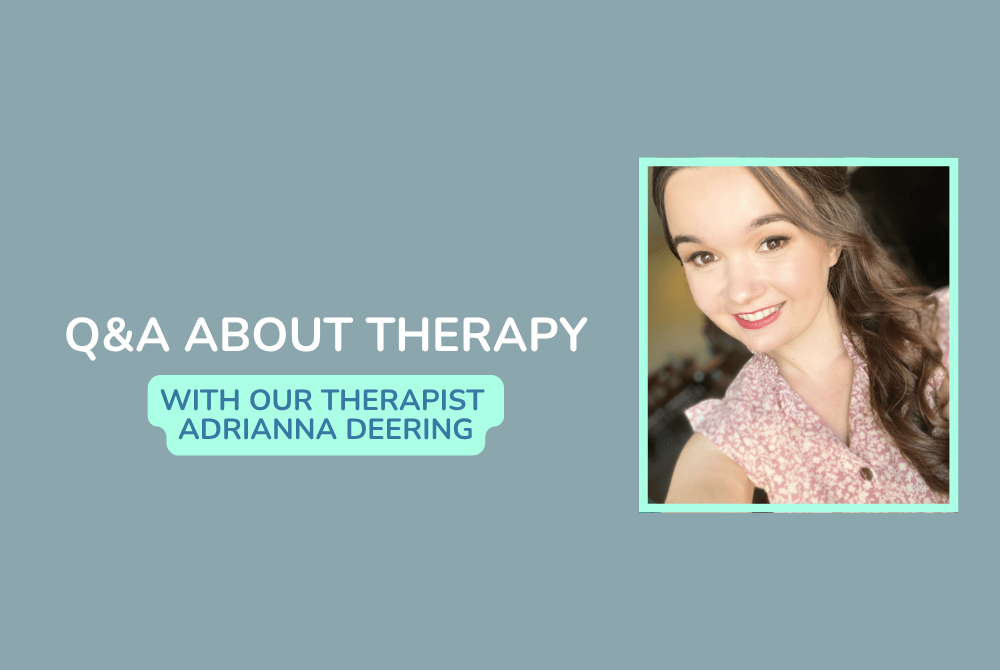
Q&A About Therapy with Adrianna Deering
Therapy isn’t just about managing stress or making it through life’s transitions, it’s about creating space to understand yourself more deeply and build a life rooted in balance, self-compassion, and clarity. In this Q&A, Empowered Therapy therapist Adrianna Deering shares how she helps clients navigate burnout, perfectionism, relationship patterns, dating anxiety, and the complex identity shifts that come with pregnancy and parenthood. She explores the importance of boundaries, attachment, and redefining self-worth beyond productivity, helping clients feel more grounded, supported, and connected to themselves through every stage of change.
How do you help clients set boundaries without feeling guilty?
Answer: I gently remind clients that rest is productive! It’s important to recognize and accept your limitations to reduce the risk of burning out because then you’re really of no help to your job, even if your brain is trying to convince you otherwise. Setting boundaries may feel uncomfortable or guilt-inducing at first but the long-term impacts will benefit you both as a person and as a professional.
What strategies do you offer for managing burnout or chronic stress?
Answer: I often encourage clients to consider implementing firmer time boundaries (if possible!) in their work day, giving themselves permission to rest and decompress.
While we can’t avoid the responsibilities of our jobs, I do think it’s important to find at least one meaningful piece of our work to connect with in effort to reduce the risk for burnout – this can be that coworker friendship that keeps you sane, a work project that aligns with your interests and passions, or perhaps you value strong work ethic which then helps you move toward the professional you aspire to be.
And without sounding like a broken record, self-care is key! And something I always reorient clients back to to ensure they are doing small things each day to keep themselves grounded and reenergized to tackle the stressors of their jobs.
Can you help if I feel like my identity is tied to my productivity?
Answer: Absolutely! Whether you’re someone who attaches your self-worth to your achievements, or trying to make sense of who you are outside of your work, I’m here to help you toward gaining insight into why that is and clarifying your values to inform both your professional and personal journeys.
How do you help clients recognize and change unhealthy relationship patterns?
Answer: I often guide clients in building awareness into their relationship patterns through an attachment lens with education and exploration of their attachment style.
Clients may take a deeper dive into impacts from their upbringings and family dynamics or in some cases, recognize present responses rooted in past traumatic experiences.
In strengthening clients’ self-awareness and learning to identify unhealthy and potentially toxic dynamics, my goal is to help clients feel more equipped to address their needs, set and enforce necessary boundaries, and be open to taking accountability to support change in their own responses in the relationship.
Can you support me if I struggle with dating anxiety or fear of rejection?
Answer: Dating in this day and age is quite the journey to say the least and it’s common to feel anxious and fearful when putting yourself out there.
There is risk in the unknown but I’m here to help you navigate through that and build some comfort with the uncertainty along the way.
Whether this looks like challenging negative self-talk or limiting self-beliefs, letting go of others’ perceptions, or managing nerves before a first date, I’m here to support you in building the confidence you need to practice openness, curiosity, and vulnerability in your dating experiences.
What are common mental health challenges during pregnancy and postpartum that you help with?
Answer: I specialize in supporting clients with experiences of anxiety, depression, and OCD that may occur during pregnancy, postpartum or both.
These mental health challenges may encompass feelings of disconnect with one’s pregnancy experience or difficulties bonding with their baby postpartum along with intrusive thoughts, excessive worrying, insomnia, sadness, and mood fluctuations – just to name a few.
How do you support clients experiencing postpartum anxiety or depression?
Answer: First and foremost, I ensure a validating space for clients to safely express whether that be anxious or intrusive thoughts, feelings of shame or failure, and other intense emotional experiences within their postpartum journeys. My goal is to foster a non-judgmental environment and engage clients in practices of self-compassion, perinatal psycho-education, and learning skills toward alleviating unhelpful thought patterns.
I often guide clients in building comfort in accessing other forms of support whether that be friends and family, support groups, community resources, and reengaging in own self-care practices while holding space for clients to work through any surfacing feelings of guilt or avoidance.
Can you help if I’m struggling to adjust to motherhood or changes in identity?
Answer: Yes! Motherhood, without a doubt, can bring complex shifts in identity that may be challenging to grapple with. Between the physiological, hormonal, mental and emotional fluctuations, so many mothers feel a loss of who they used to be. In therapy, rather than the focus being on returning to your “old self,”
I guide clients in redefining and embracing new pieces to their evolving identity. The goal is to work toward balancing being a mother and a person with their own individual needs.
What does therapy look like for someone navigating pregnancy or early parenthood?
Answer: Pregnancy and the early stages of parenthood come with a lot of unpredictability. I believe that in order for therapy to feel both meaningful and productive, it needs to feel accessible rather than another stressor thrown onto an already very full plate.
I offer a lot of flexibility to my clients during these challenging times concerning any changing scheduling needs to having their child with them during sessions when child care isn’t workable.
As a recent first-time mom myself, support in the form of flexibility and understanding goes a long way when balancing quite literally all of the things!
How do you support moms who feel overwhelmed, anxious, or disconnected?
Answer: I help clients normalize and validate these emotional experiences, gently reminding them that these feelings are common and don’t indicate that they’re doing anything wrong.
It’s so important for clients to meet themselves with kindness and compassion while practicing openness to lowering their self-expectations, challenging perfectionism, and accepting outside support.
I also engage clients in building awareness into any behaviors or tendencies feeding into the anxiety or disconnect, further exploring strategies to alleviate unhelpful patterns to support moms in being more present and intentional with their families.
Can you help with feelings of guilt, shame, or not feeling like “myself” after becoming a parent?
Answer: Certainly! Becoming a parent is probably both the greatest and hardest life adjustment one makes – truly, life will never be the same and it’s normal to grieve that.
The co-occurring feelings of guilt and/or shame are extremely common and I help clients explore these feelings in depth in ways that feel meaningful to their individual parenting experience — whether that be reframing their perceived failures, letting go of internal pressures to be the “perfect parent,” navigating social media comparisons or comparisons to other parents, understanding the impacts of their own upbringing, or all of the above!